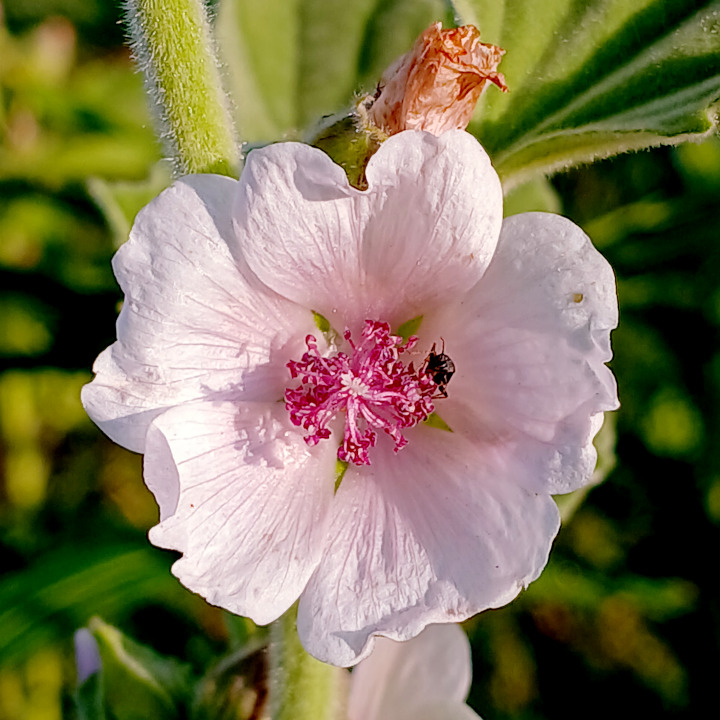
Marshmallow is a well-established herbal remedy!
It is a lubricating herbal; the roots soothe the gastrointestinal tract and the leaves soothe the urinary system and the lungs.
This lubricating ability seems to relate to marshmallows affinity to grow in wetter places (marsh like places).
It is empowering to grow your own herbal medicines. I often try to grow herbs once I’ve developed an affinity for them, it helps me learn about them more deeply, and help stock up my apothecary! I hope you can do the same.
Strategies for Medicinal Herbaceous Perennials
Planting herbaceous perennials for medicinal use, in our view, should be done with the intention of creating a stable plant population somewhere you can access and tend to the plants which you can then essentially wildcraft from.
How stable / widespread a population needs to be depends on which type of plant part is used medicinally
Aerial parts (stems, leaves, flowers, seeds, bark): you don’t need as many established plants if you are harvesting ariels parts, as generally these parts will grow back from the roots (or remaining plant in the case of bark) Roots: if the medicinal part of the plant is the root, then you are generally eliminating that plant from the population when it is harvested for medicinal use. To keep populations stable, more plants are required.
Plant with the intention of first establishing a stable population which can either 1) provide seeds for you to collect and grow 2) self seed 3) spread by roots or 4) some combination of those three.
This year we have quite a few fresh first year plants for you to plant and enjoy.
Growth Parameters:
Expect an herbaceous perennial 3 to 4 feet tall. Ideally plant in a moist soil with a good amount of sun.
Can tolerate some shade and heavier clay soils.