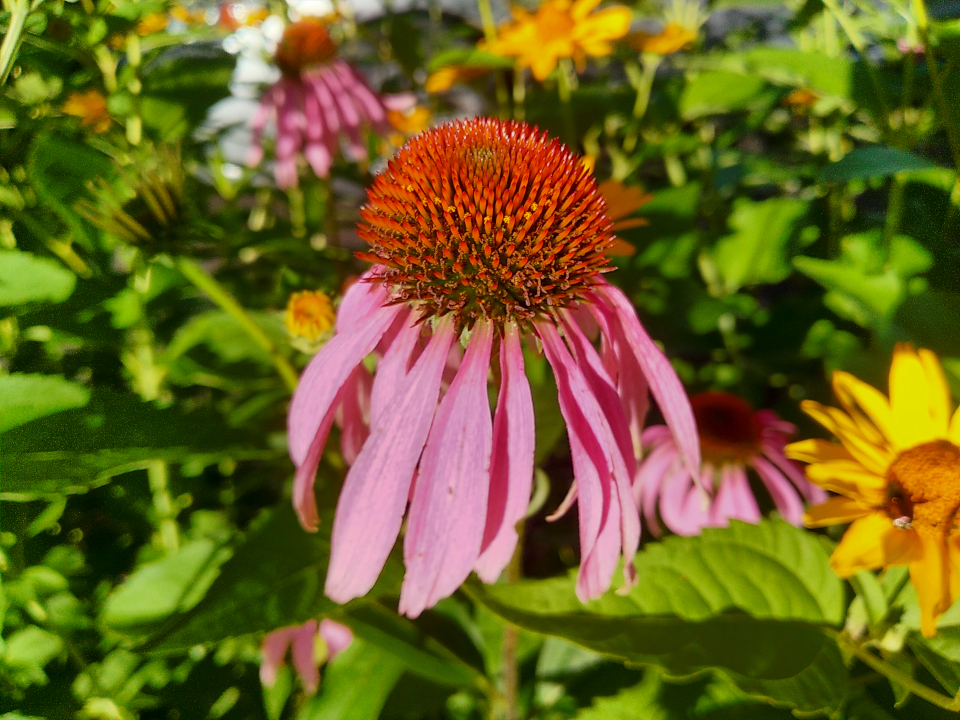
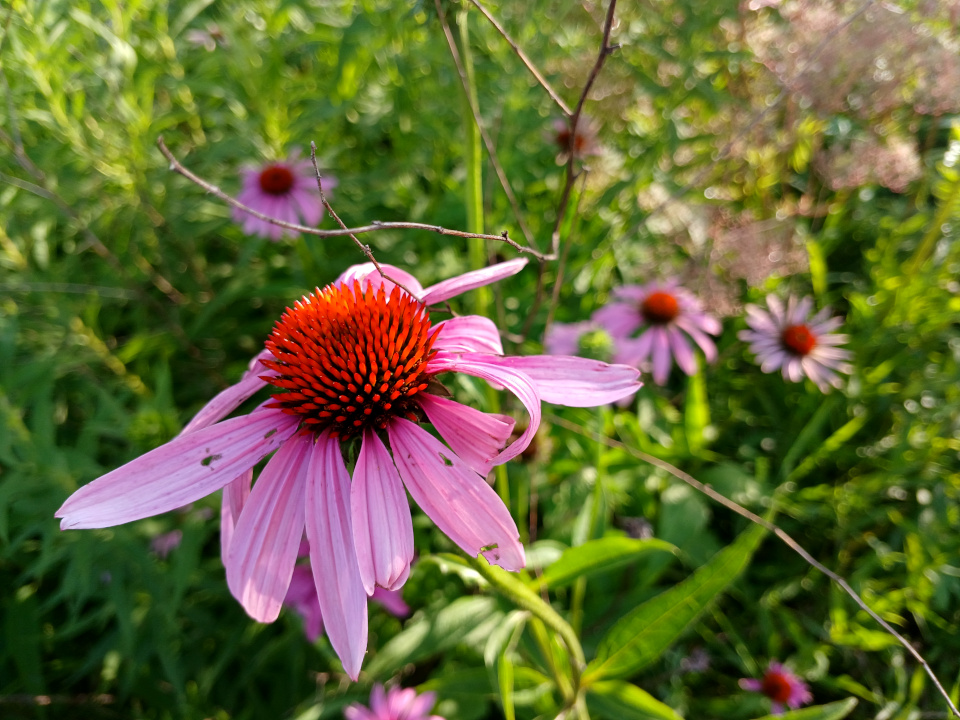
Echinacea purpurea is a classic, much loved garden perennial also known as purple cone flower.
Echinacea has more recently become one of the most well known herbs in the world, often cited as an immune booster to take when you have a cold.
However Stephen Buhner has, as skillfully as ever, called this popular conception of the herbal uses of E. purpurea into question. See his monograph in “Herbal Antibiotics” for a detailed account, but long story short he calls for the use of the fresh juice of the aerial portions of E. purpurea, not the roots! This is how Germany, a country leading the mixture of orthodox and herbal medicine, uses the plant. I do like this approach because it allows the plant to live perennially. Further, the Germans really only consider E. purpurea to be a good medicine for the topical treatment of wounds and sores.
From an ecological perspective, it is best to grow E. purpurea from seedling grown sources or more wild ecotype sources. That is because the many named varieties have been bred so extensively for beautiful blooms and colors that they are no longer of benefit to pollinators. I have certainly seen this to be true in one of my landscapes that has both types: I never see insects on the bred plants but often see them on the wild ones.
With all that said, E. purpurea is a great garden plant which grows to 3-4 feet tall in sun or part sun, and likes medium soil moisture. Easy to propagate from seed, much easier than many of the other Echinaceas!