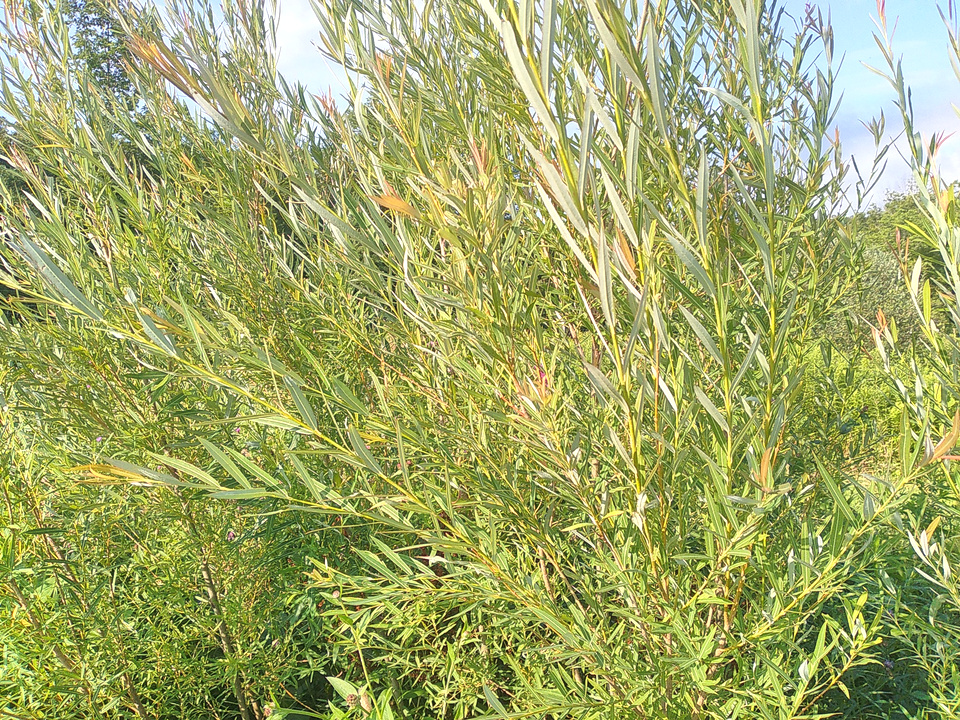
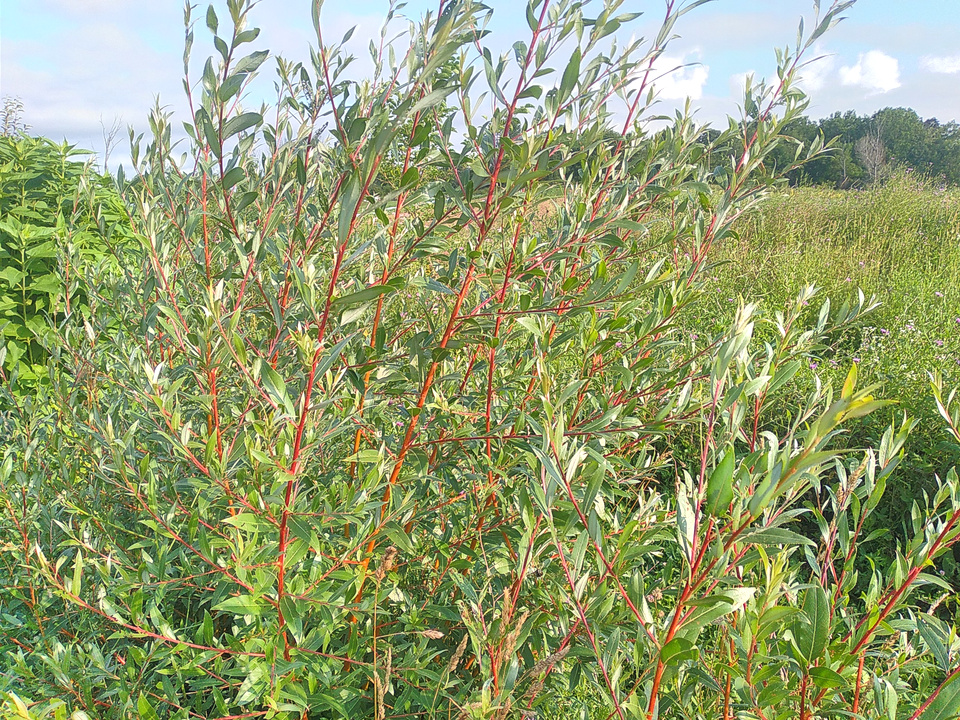
Willows are a diverse group of ancient plants. There are huge willows and tiny willows.
Even with such a diversity of expressions, a few general things can be said about willows:
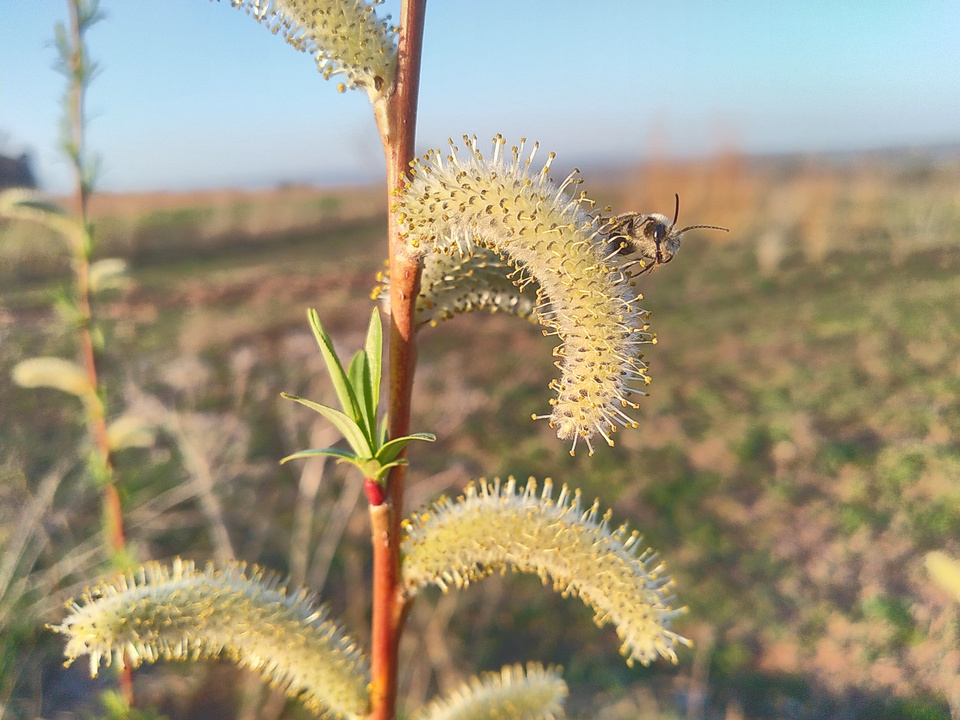
Willows are often great for spring pollinators. Their flowers open up very early in spring, creating nectar flows for insects before much else is available.
Willow stems are often very flexible, hence the use of many species historically for basket making.
Willows tend to grow naturally in wetter locations, near water.
Willows are a great plant for silvopasture systems because they regrow nutritious fodder for animals very quickly and are resilient and medicinal.
The leaves and bark of willows are also used widely in herbalism. The bark of willows contains salicin, which is a chemical closely related to aspirin aka acetylsalicylic acid. Willow bark is generally used as an anti-inflammatory, and while Salix alba is considered the officialis (the species designated as “the medicinal one”), the general consensus is that all willow species can be used medicinally, and the more bitter the bark, the stronger its anti-inflammatory properties (see https://www.learningherbs.com/blog/willow-uses#gsc.tab=0).
Generally, I would expect any of these willows to be great medicinal plants, however the literature would suggest any of the S. purpurea varieties to be among the best we have. For ease of harvesting (due to the upright, less branching form) I would suggest S. miyabena to be a great choice, especially in conjunction with its immense pollinator benefits.
Willow Cuttings
Willow has an amazing ability for stems to root themselves into new plants. This property was utilized by propagators historically when tea made from willow was used as a rooting hormone for other plants.
These Plants Grow Easily From Hardwood Cuttings
We have hardwood cuttings of these plants available so you can propagate your own plants! Hardwood cuttings are literally just first year branches cut from a mother tree.
It is often almost as easy to plant hardwood cuttings of willow, elderberry, currants, and poplars as it is to plant a rooted plant. It also allows you to get plants growing where digging a large hole may be too destructive, like near the roots of a large tree or on a slope that is too steep to dig without being highly erosive. It also allows you to get many, many plants going with minimal upfront work of digging many holes.
Check out this video for a detailed look at planting your hardwood cuttings.
While we sometimes root willow cuttings and sell them as plants, generally speaking I think rooting them in their final location is more economical and ecological. Cuttings are very affordable, and shipping them in a small box uses less energy than a big one. Also, when you dig up rooted willows there is a strong tendency to tear the roots off the sides of the plants.
A great simple, method to grow willows from cuttings is this: dig up a large circle where you want your plant to be (say a diameter of 3 or even 4 feet) and clear it of perennial weeds. Stick your cutting in, and protect it with a guard, or even just loosely pile sticks around it. Then you’re ready to go! Water it in spring while rooting begins, and then by summer when the shoots are getting more extensive, it will be hard to ever slow that willow down again!
We are selling down to single cuttings this year, so feel free to get as few or as many as you’d like!
Cutting Varieties Available This Season:
Taller, thinner willows (expect at least 10 feet tall plus at maturity):
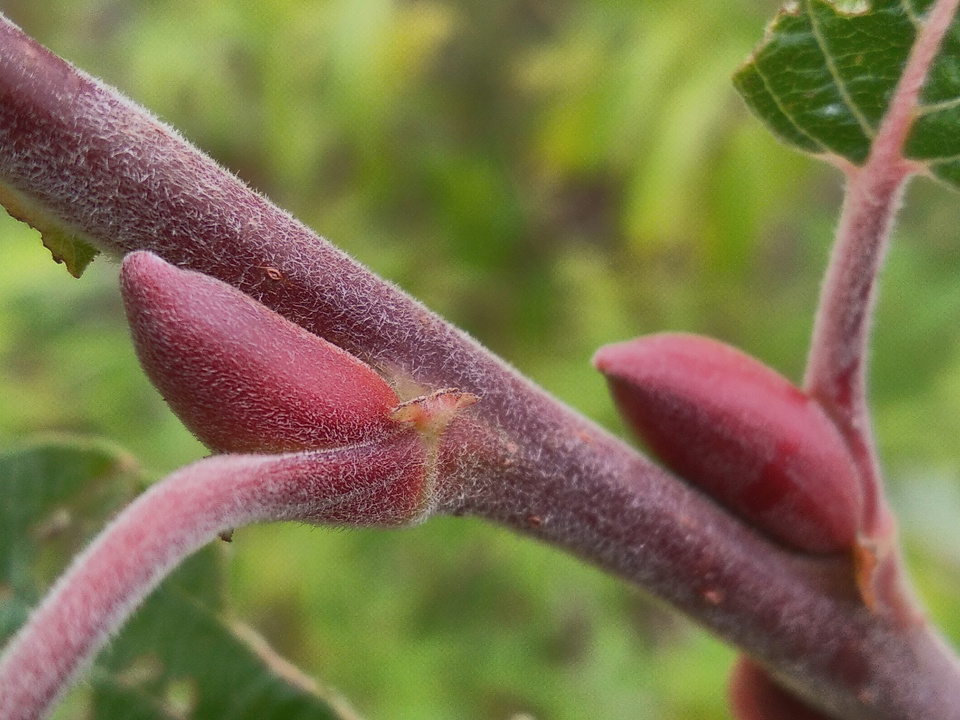
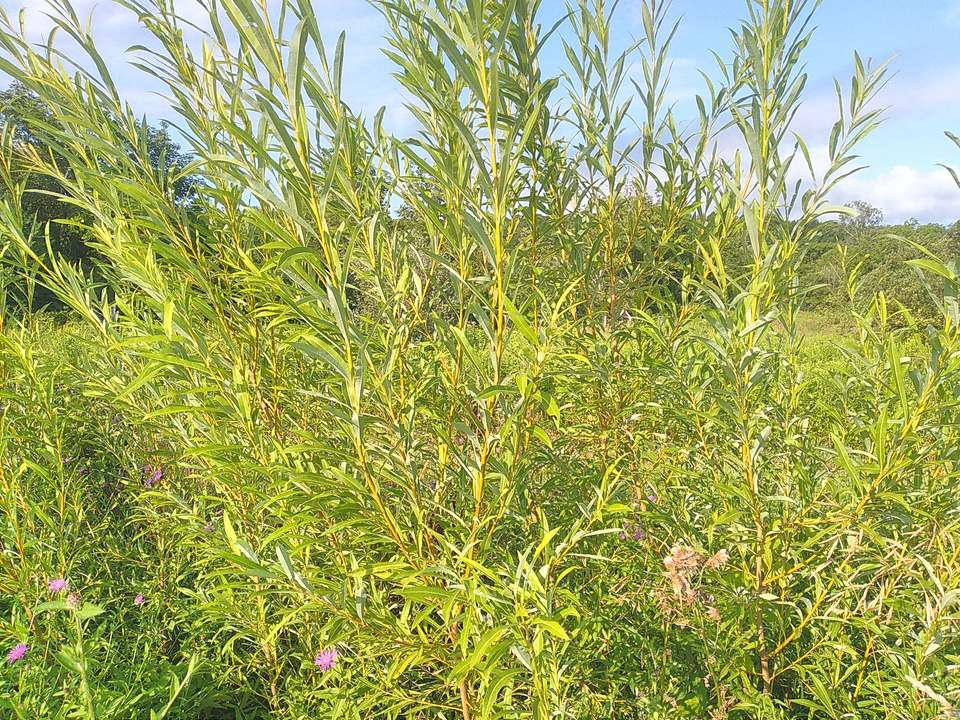
- Miyabena – Japanese, large, fast growing biomass willow and excellent for pollinators in spring. Size of huge shrub or medium tree. Thick redish stems.
- Rubykins – Japanese, tight column like growth, greenish stems thinner than Miyabena, very elegant.
- Viminalis – excellent for pollinators in spring, can be thicket forming. Thicker stems, very green foliage and stems.
- Britenzis – German variety with brilliant red/orange stems and silver/green/blue foliage. Great winter interest. Can get very large in good conditions.
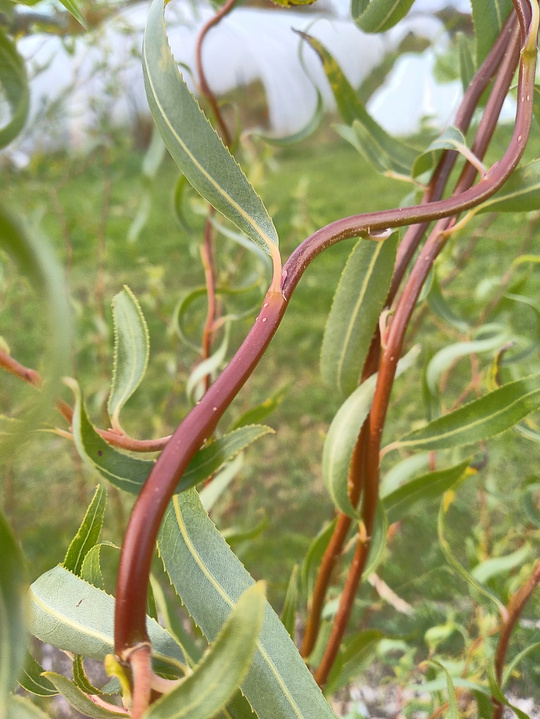
- Curly – Curly leaves and stems! Glossy redish purple stems, not crazy vigorous like other willows in this category, and definitely likes wetter areas.
- Aquatica – an awesome biomass willow with great catkins for pollinators. Lots of light green colors.
More bushy willows (mostly Salix purpurea willows, with purple, brown, and golden tones):
- Streamco – the ultimate stream erosion willow. This is a purpurea willow so would be appropriate for some basket weaving as well.
- Packing Twine – another purpurea willow, however these stems are so thin and flexible you can use them as a thick twine!
- Oka – an old school, fine basketry willow.
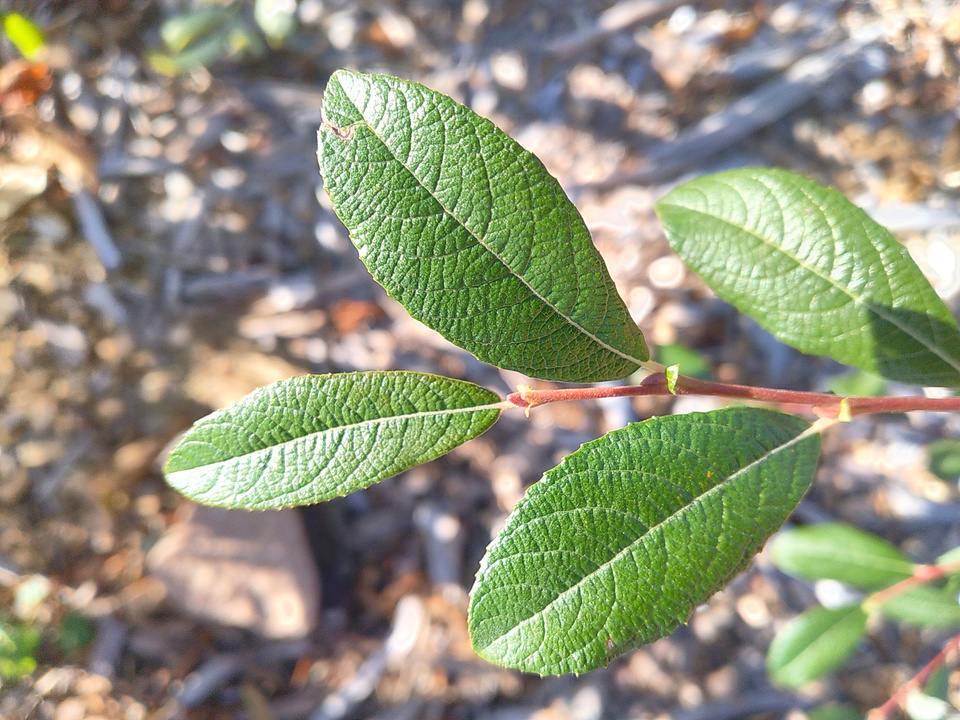
- Bebbs – Also known as the diamond willow, has green leathery teardrop like foliage, thicket forming and great for erosion control. Said to be the most widely growing willow in North America.
Pretty wild and crazy forms (both tall and wide, or other)
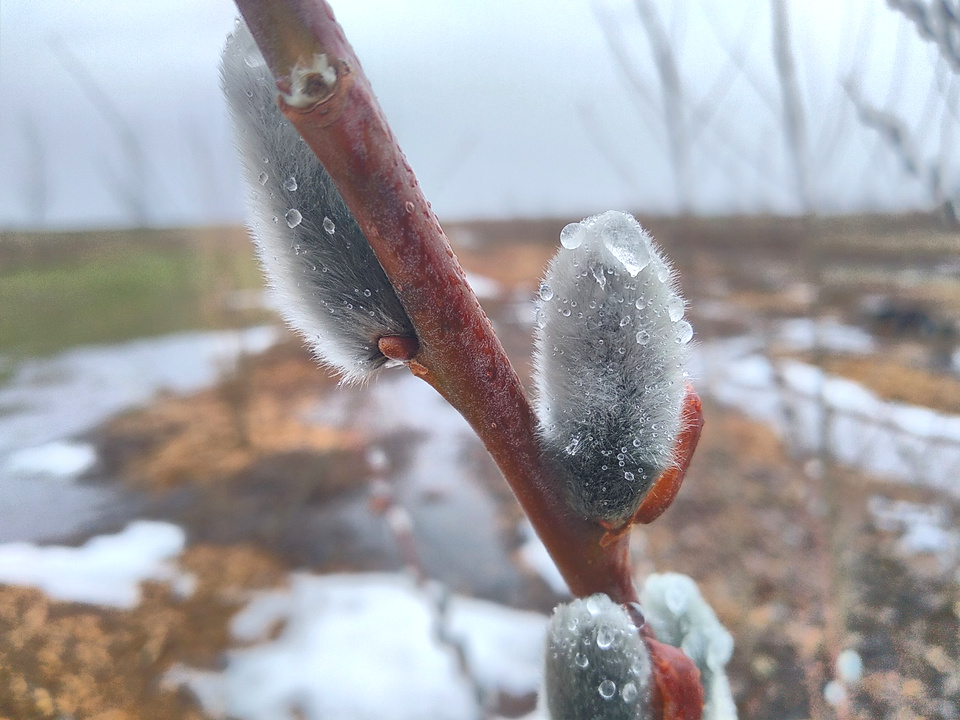
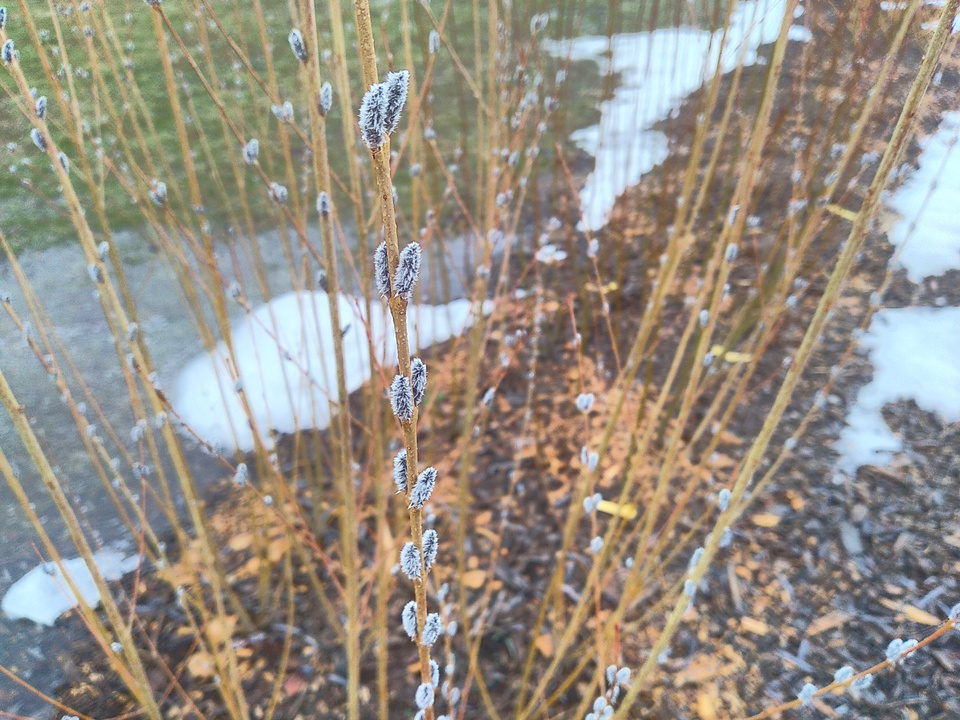
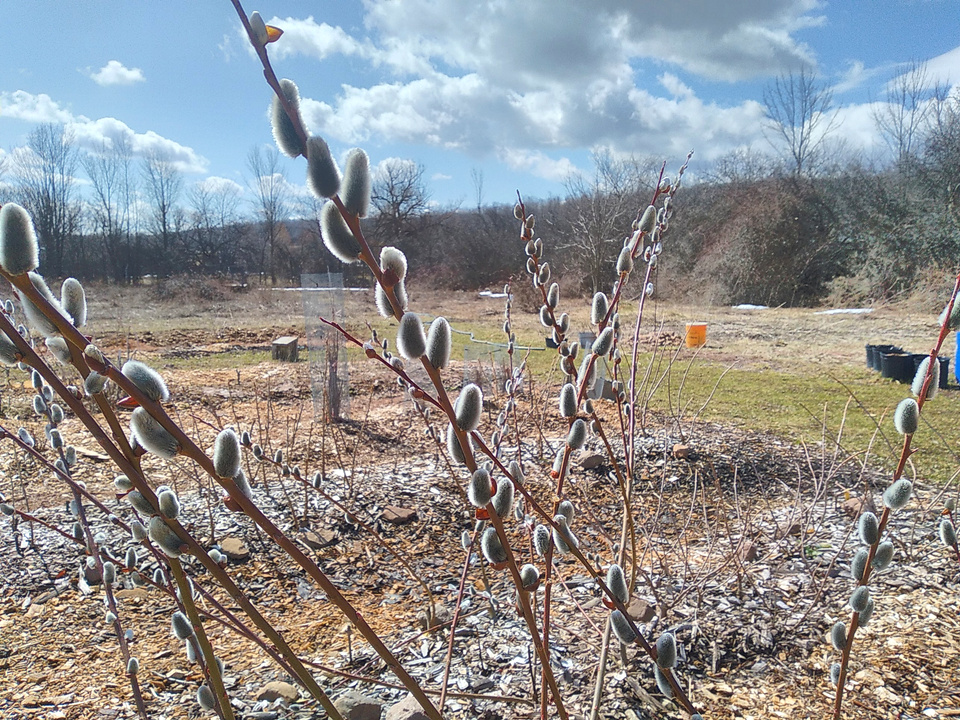
- American Pussy Willow – this selected pussy willow has huge silvery male catkins, which develop to yellow as spring progresses and pollen is released. Great for cut stems.
- Salix eriocephala – beautiful and quite fast growing! A thick shrub type, quite wild looking.
- Arctic – this willow is a relatively low, sparse grower with bluish stems. The first few years stems stay largely towards the ground.