Elderberry has been rising in popularity in the last few years… and for good reason! Elder has been a powerhouse of lore and healing for a long time and is considered highly medicinal. It is an immune-supportive plant and an anti-viral, along with plenty of other herbal traits.
The berries of elderberry are certainly the best known part, however many healers are beginning to use the flowers as well. Uses of elderberry include teas, jams, juices, wines, syrups, lozenges, and more!
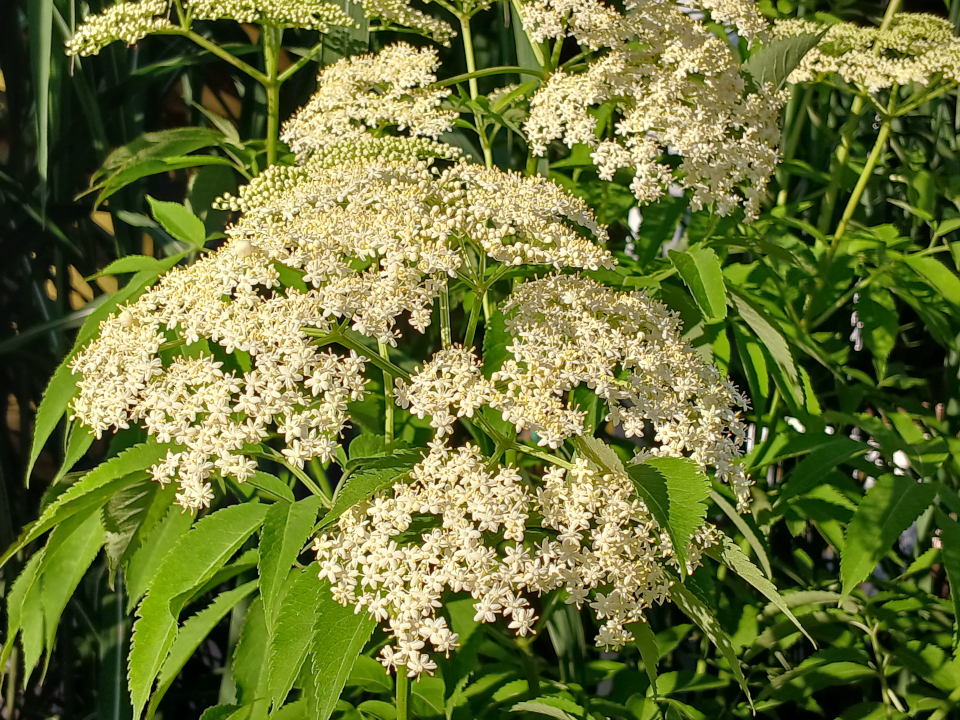
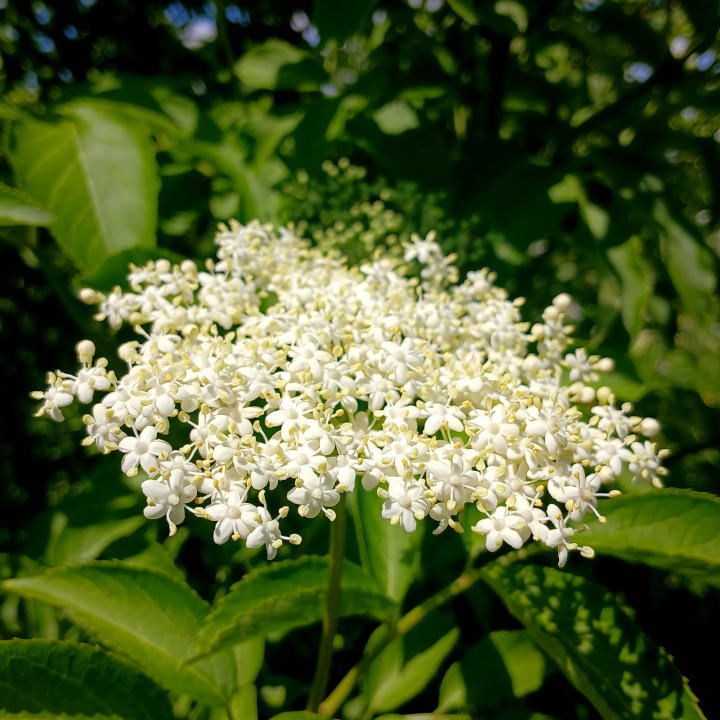
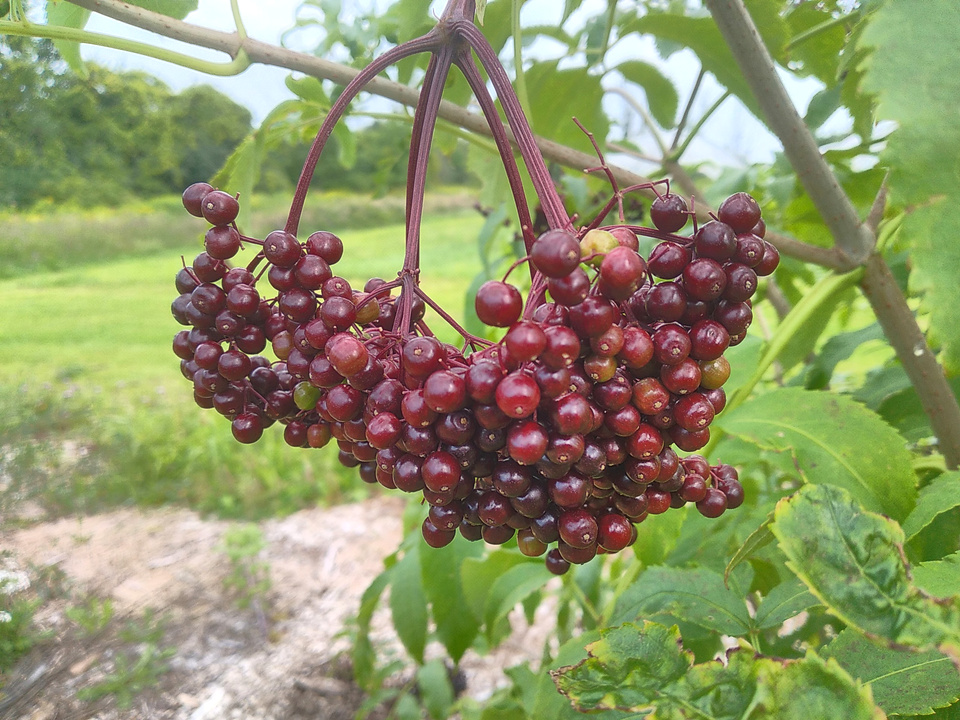
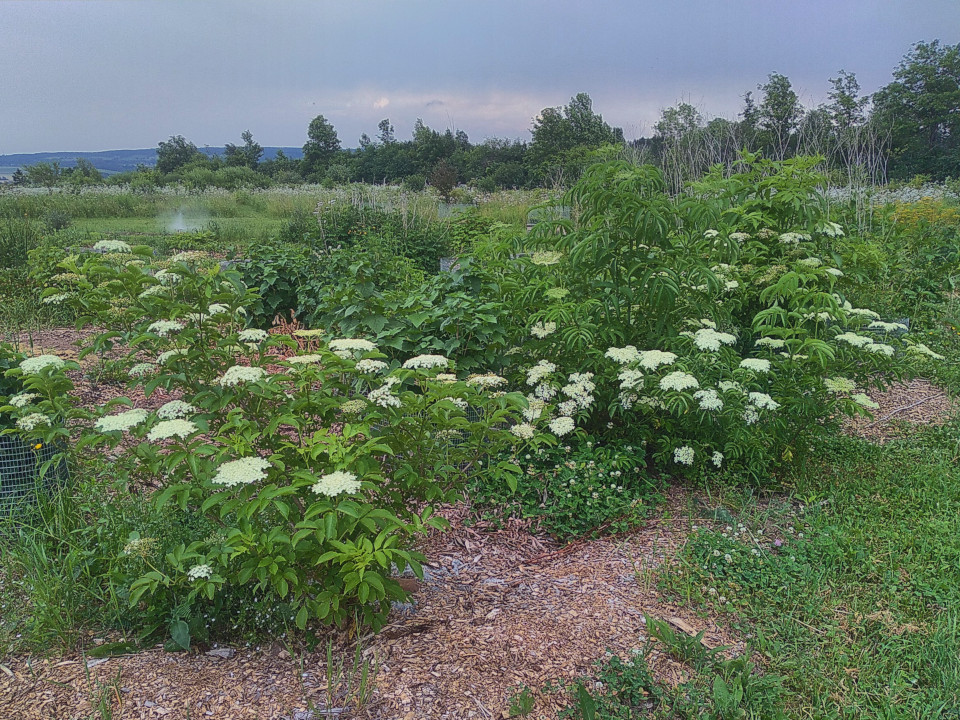
Elder can be an awesome ornamental all on its own, as the flowerheads are showy white clusters of many small flowers. These eventually lead to the deep purple elderberries.
Varieties Available:
- Akiva – a wild selection with excellent disease and pest resistance. Primarily American genetics. Fruits on first year wood.
- Johns – a classic American selection known for its large fruit clusters
- Marge – hybrid of American and European elder, may be self-fertile. Good growth and great fruit sets on second year wood.
- Ranch – a very cool selection of American elder because it stays relatively short! tops out at 6-8 feet.
- Scotia – very vigorous grower with quite large berries. Very sweet flavor. Fruits mostly on second year wood, but a little on first year wood.
This year we have a combination of cuttings for propagation and first year bare root plants.
These Plants Grow Easily From Hardwood Cuttings
We have hardwood cuttings of these plants available so you can propagate your own plants! Hardwood cuttings are literally just first year branches cut from a mother tree.
It is often almost as easy to plant hardwood cuttings of willow, elderberry, currants, and poplars as it is to plant a rooted plant. It also allows you to get plants growing where digging a large hole may be too destructive, like near the roots of a large tree or on a slope that is too steep to dig without being highly erosive. It also allows you to get many, many plants going with minimal upfront work of digging many holes.
Check out this video for a detailed look at planting your hardwood cuttings.
Growth Parameters:
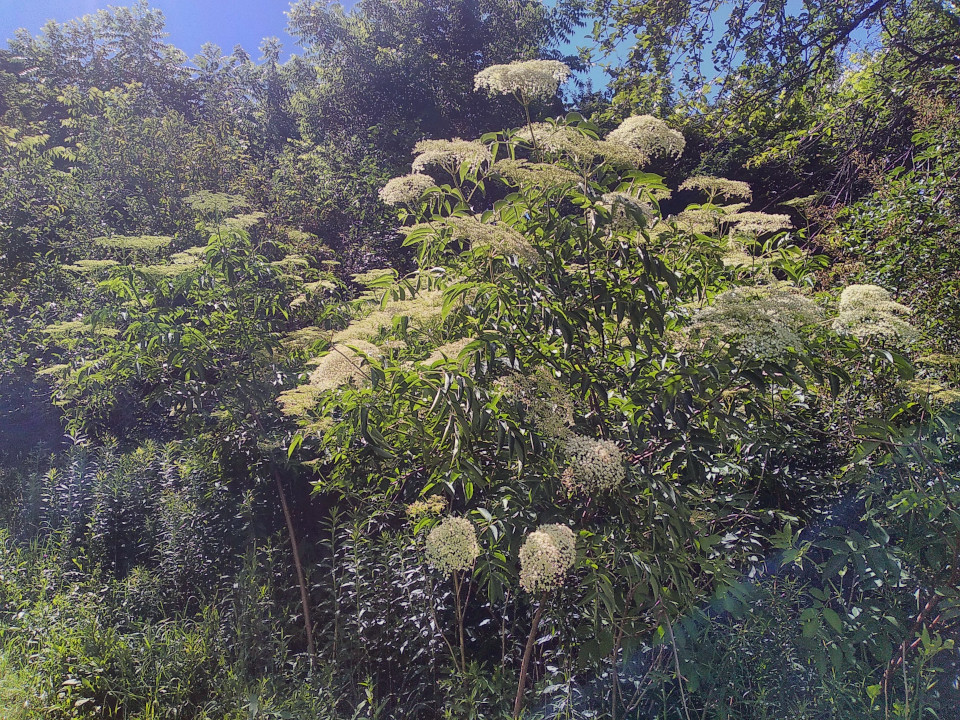
Exact size of the mature plants depends on the variety. We are only growing named varieties at this time so feel free to look them up for exact sizes, but generally expect a many stemmed shrub between 8 and 15 feet tall.
Elder likes to spread by underground runners, especially in rich soils with a lot of organic matter. Also likes wetter locations when organic matter is there to prevent the soil from being too dense.
Can (and should) be cut back every few years to stimulate fresh new growth. Generally I prefer to leave at least a stem or two as a nurses stems for the roots, but cutting back all stems to the ground is possible when the plant is well established. Just ensure that the plant is still quite dormant to allow time for new shoots to start before it’s too warm.
Generally two varieties are required for fruit set, but flowers can always be had with lone plants. Some varieties are listed as self-fertile, but descriptions are often inconsistent, so having two varieties is the safest bet.