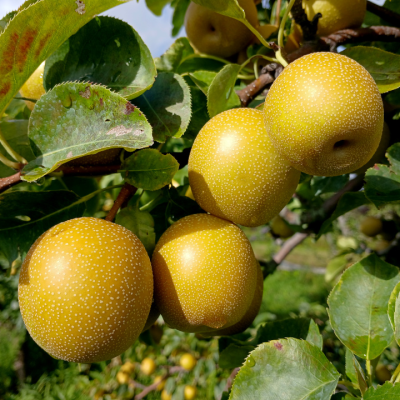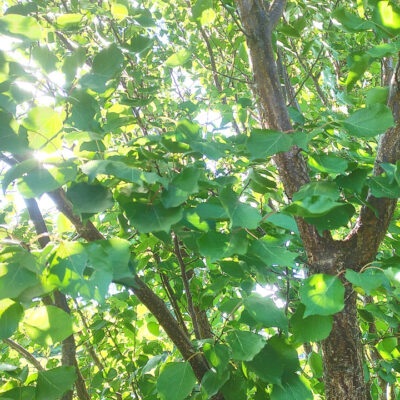
Apples are one of the quintessential northern fruits. Across hundreds of varieties, there are apples for fresh eating, for baking, for cider, and more.
Apples came originally from Kazakhstan, and were eventually brought to North America to provide cider to the pioneers as it was safer to drink than water. Now, thanks to many modern technological advances (advanced breeding, refrigeration), we can enjoy many varieties of apples year round.
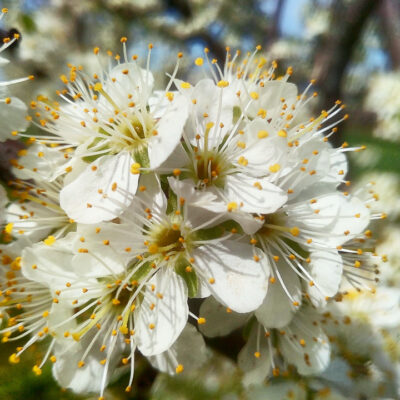
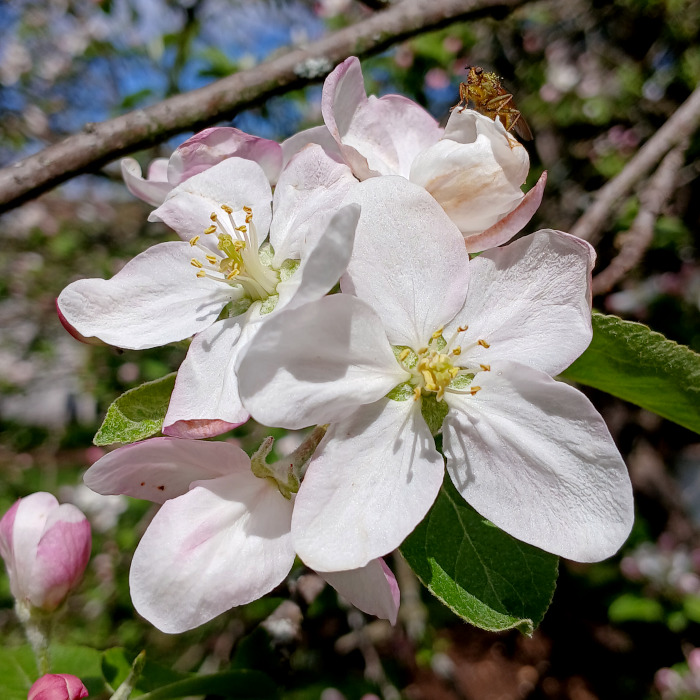
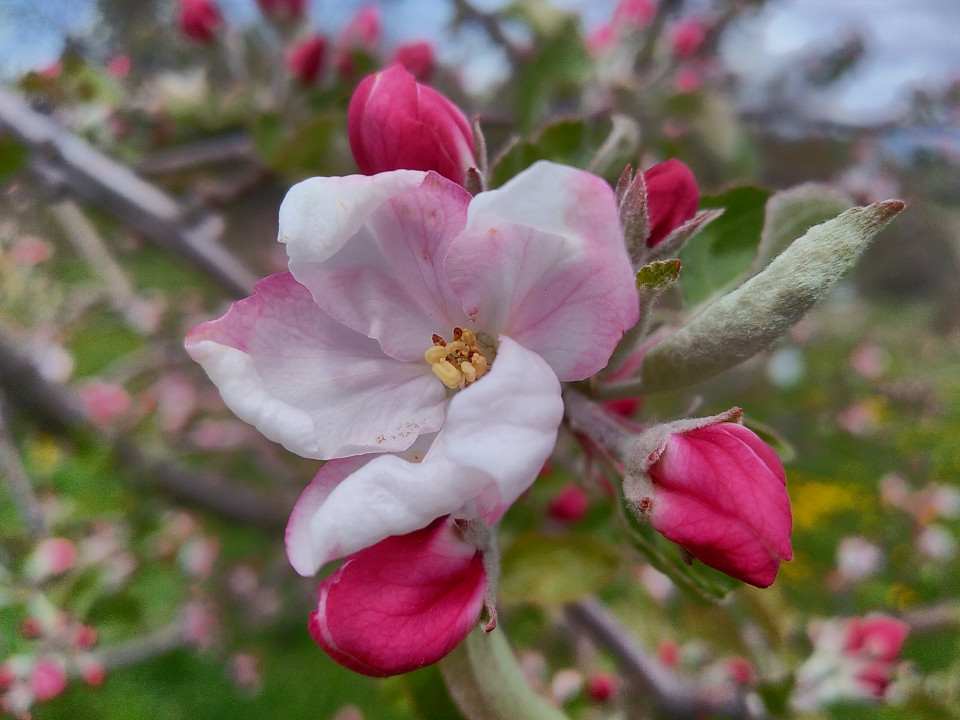
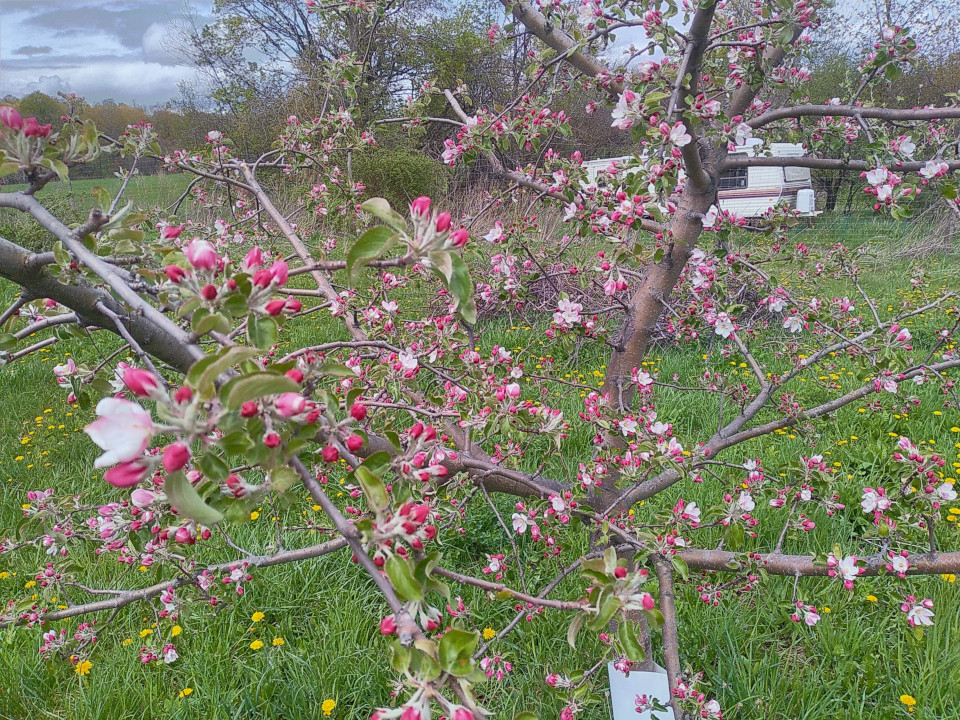
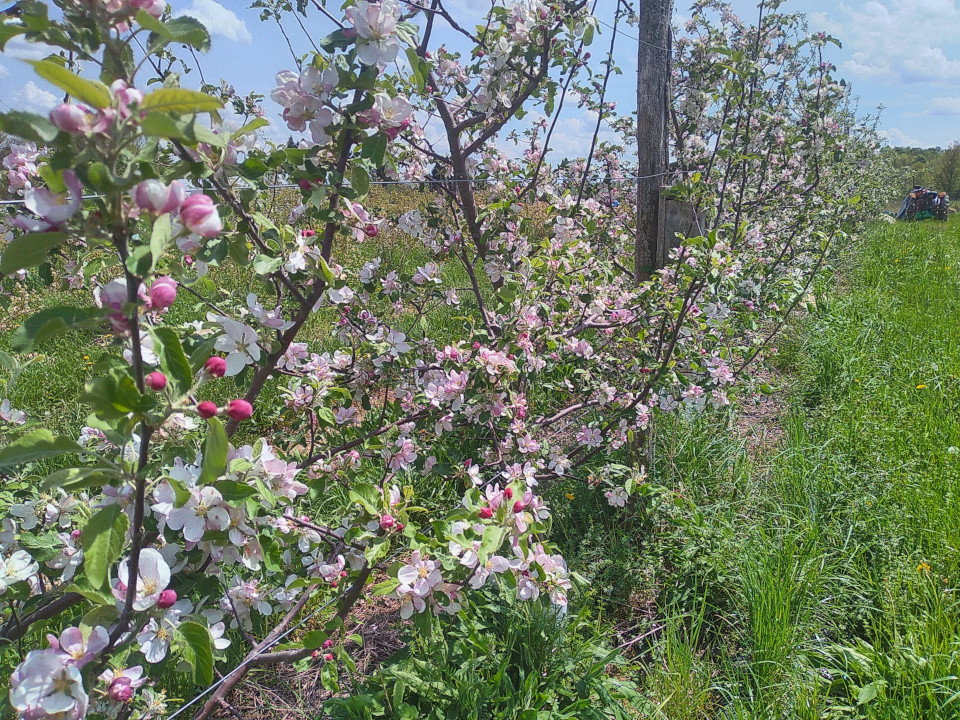
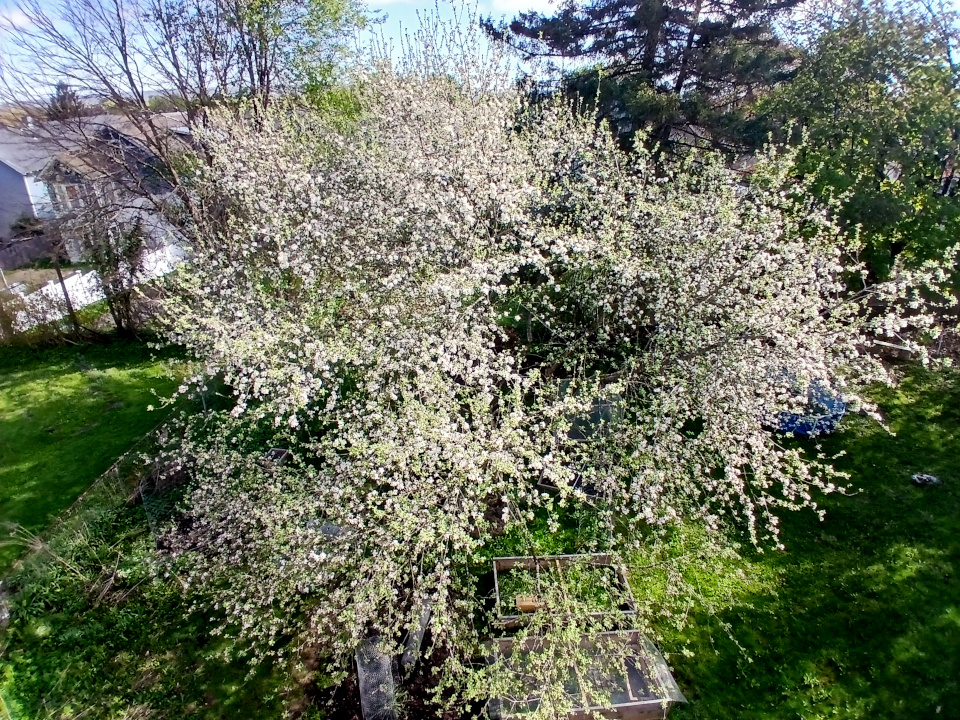
Apple flowers are a sign of the height of spring. They are generally beautiful whites but often have pinkish overtones.
Rootstocks:
When apple trees are grafted, propagators have many choices of what rootstocks to graft onto. Rootstocks control many of the most influential characteristics of a tree: how big it is, what diseases it’s resistant to, and how it performs in different soil and moisture conditions.
Thanks to modern breeding programs, we have many rootstocks which impart a small form onto apple trees, making pruning and harvest generally faster and easier, especially when the trees live on trellis systems. The main downside of these trees are that they are short lived, and without at least a stake they will topple over as their roots have weak anchorage.
This year we have decided to explore the opposite end of the spectrum: rootstocks which are large, strong, long lived, and highly adaptable. Given many of the current issues in the world today, this seemed like a perfect time to explore these themes.
We also grafted these trees a bit higher on the rootstocks than you would usually see. This was done intentionally to allow you to grow rootstock shoots and stool layer them if you wish to graft your own trees on these rootstocks eventually.
Apple trees this year are on one of two rootstocks:
>>> Antonovka – we are very excited to be working with this ancient Russian rootstock. Unlike the vast majority of rootstocks which have been cloned from a single original tree, Antonovka is actually a landrace: a genetically stable population which lived in isolation from other apples for many many years. This means that if you grow this rootstock out and collect seeds, you can grow more Antonovka rootstocks from these seeds, and the resulting trees will be very similar to your original rootstock! Talk about resilience!
These trees are considered to be a 100% sized tree, or equally as large as any full sized wild apple. It is considered widely adaptable to the widest range of soil and moisture conditions, including being largely drought tolerant.
>>> Bud 118 – another classic Russian rootstock. This is a clonal rootstock that is more precocious than Antonovka (i.e. you get fruit at a younger age), and slightly smaller at 90%.
Apple Varieties:
>>> Winecrisp – Pairing with our theme of resilience, winecrisp is one of the best choices for storing apples. Fruit ripens late but stores excellently, allowing apples to be stored well into winter in root cellars, and with perfect refrigeration all the way into spring! Sweet and crisp flavor ideal for fresh eating.
>>> Dolgo – A classic and delicious crab apple. Acidic, sweet, and tart. Beautiful white flowers ( i.e. great ornamental tree as well as great fruit), precocious, good for fresh eating or cooking down.
>> Pristine – A very early ripening apple, enjoy fresh apples in early August before any other varieties are available. Very sweet flavor for fresh eating. Does not store well.
What is Grafting?
Grafting involves taking a branch from a plant you want to clone, and performing special cuts to make it fit onto an existing stem-with-roots.
The two pieces fuse together to form a new plant
The branch you cut is called a scion. The scion is how you select what variety you want to clone Example: you would cut a branch from a Macintosh apple tree to clone it by grafting, the branch you cut is now a Macintosh scion.
The stem-and-roots you graft onto are called a rootstock. Rootstocks generally impart physical characteristics to the tree like size and vigour, as well disease resistance.