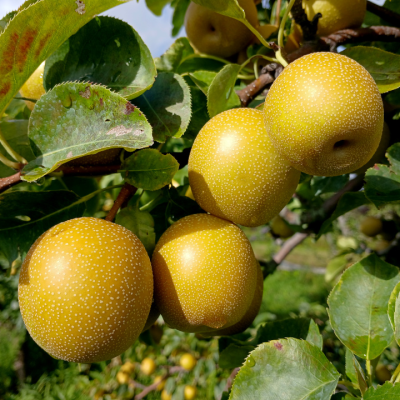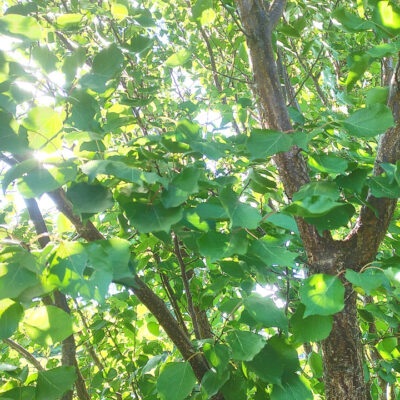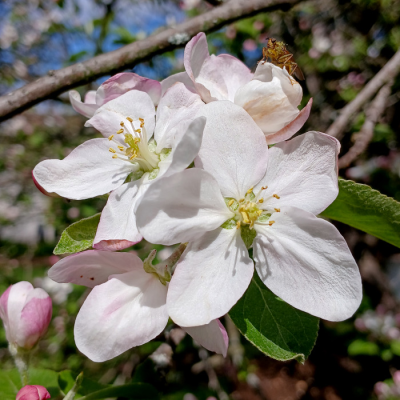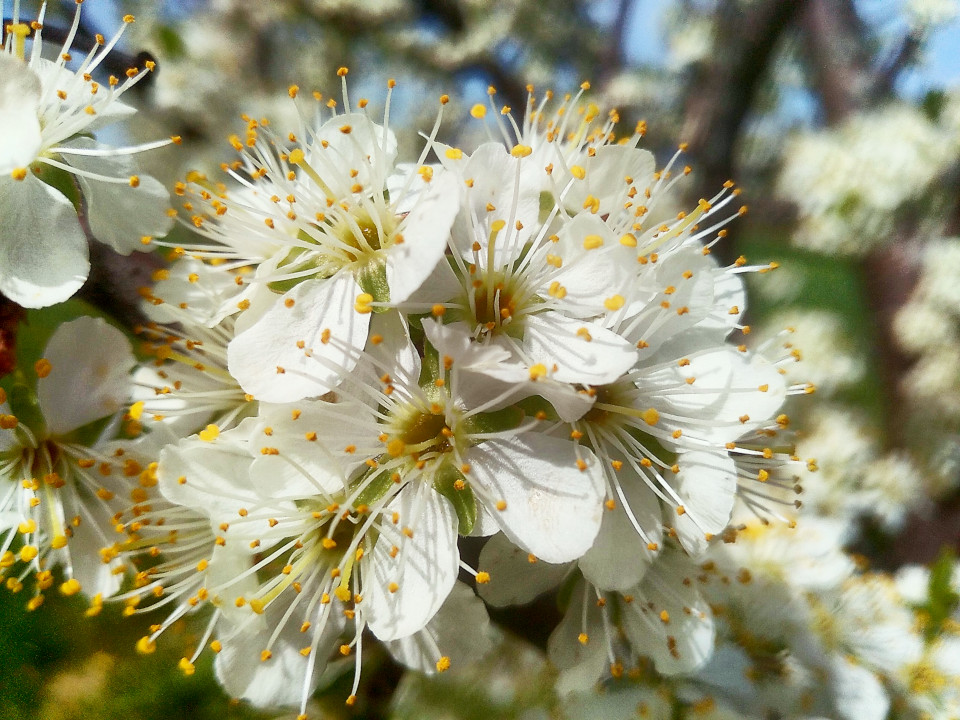
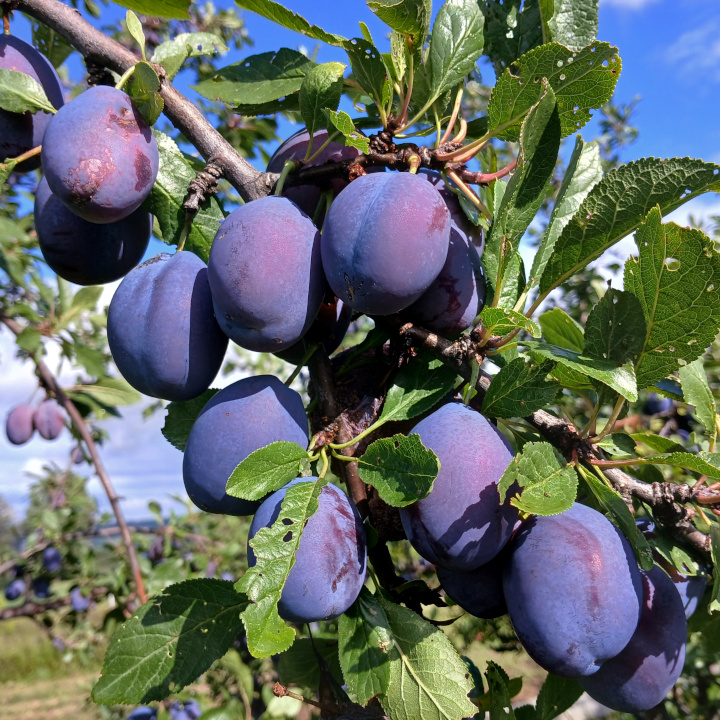
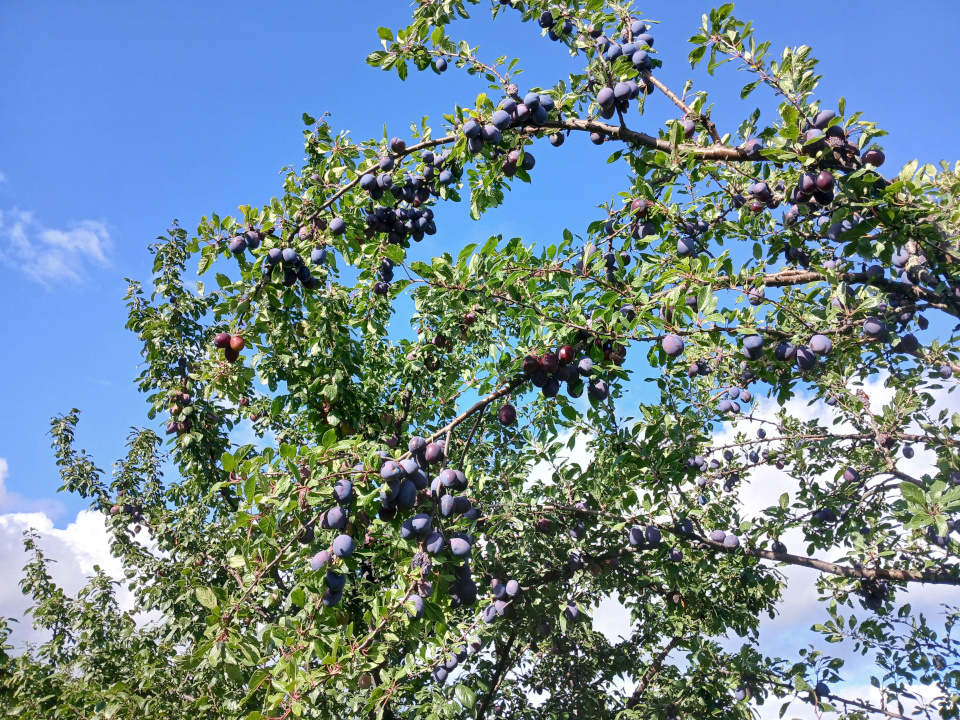
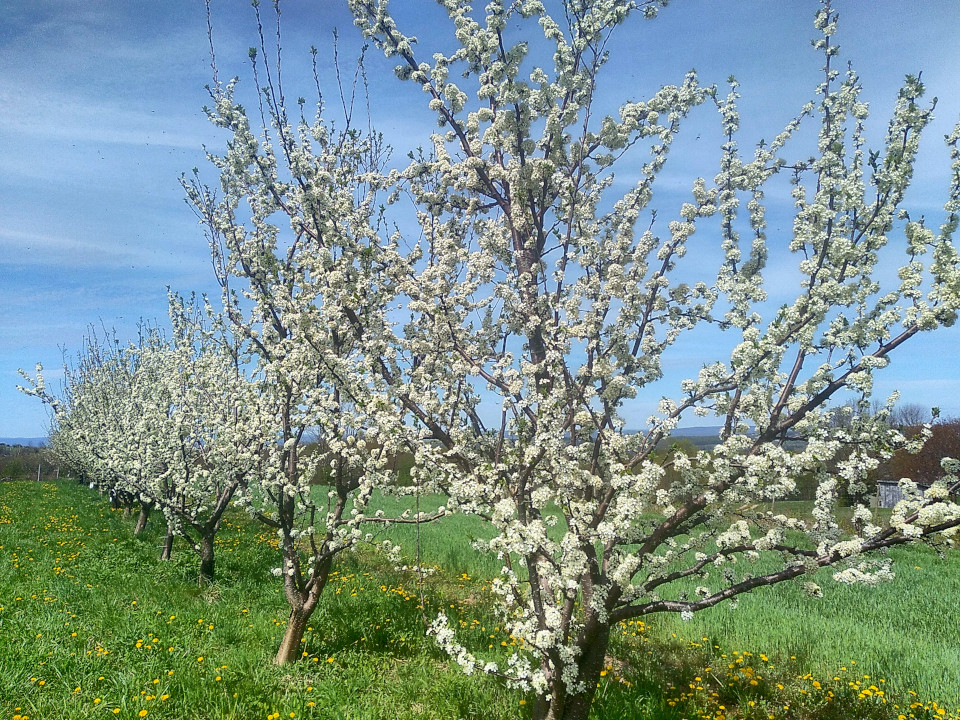
Plums are such an exceptional fresh eating fruit in summer. They are also a stunning spring flowering tree. They are part of the cherry group of trees, so expect beautiful white flowers loaded with pollinator insects in May.
Varieties available this year:
Purple Heart – a complex hybrid clingstone plum, medium sized with red to purple skin, rich and sweet. Requires cross pollination. Hardy to zone 4
Elmore Gold – prolific, tender and sweet yellow plums. Hardy to zone 4.
Kometa – this complex hybrid is a very cold hardy, early ripening Siberian / Russian cherry plum, large red fruit with yellow flesh. Partially self-fertile. Very prolific, requires thinning.
American or American hybrid plums:
>>> Generally zone 3 to 4 hardy, all require cross pollination, and each of these hybrids is a good choice for a pollenizer.
La Crescent – smallish aromatic and sweet fruit with yellow skin. Free stone. Ripens early.
Waneta – Large fruit, heavy producer and super vigorous grower. Yellow skin with dark red stones and a small pit. Clingstone.
Toka – reddish bronze fruit, firm freestrone. Flavor is rich and spicy, a great dessert plum. Great pollinizer.
Dalton’s American – an improved selection of pure American plum with very good fresh eating flavor when fully ripe. Highly disease and pest resistant.
Roostocks available this year:
Krymsk 1 is considered a semi-dwarf plum rootstock at 40% of standard (compared to myrobalan which is considered a 100% sized plum rootstock and requires a ladder for harvesting at maturity). This smaller size should help greatly with managing pruning and harvesting. We’ve also found K1 to grow really well in the wet, heavy soils at our nursery.
Myrobalan – a gold standard, full size plum rootstock. Quite vigorous growth adaptable to many soil conditions.
Growth Parameters:
Expect a small to medium sized orchard tree. Give as much such sun as possible, full sun is best.
Tree Sizes
Small Trees can generally be managed from ground level.
Orchard sized trees can often be managed from ground level but generally will require a ladder for pruning and harvesting at maturity.
Full size trees are large trees that, after a certain point, will require assistance from an arborist to manage pruning safely.