Right now I’m loving pears for their toughness.
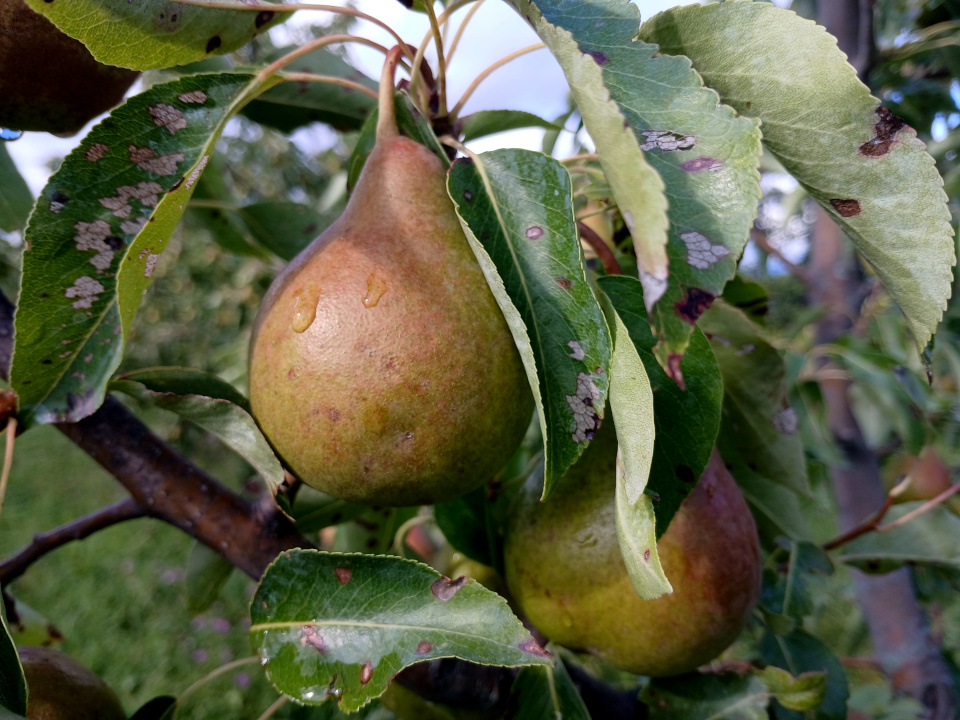
We had a deep, late frost in 2026 that wiped out much of the apple crop around New York State. Pears didn’t mind one bit! 2026 is a bumper crop year. As you go further and further north into colder zones, pears predominate more and more as harsher winters preclude other fruiting trees. Haskcaps are another notably cold hardy fruit.
Pears are a diverse group of fruits, spanning a number of species from around the world. There are pears for fresh eating as well as making many pear preparations. They also have an interesting ability to be grafted across other species, which is unusually among fruit trees.
We’re also finding pears to generally be quite amenable to top work grafting! This has opened up a number of cool possibilities, including grafting wild pears to cultivated varieties, grafting ornamental street trees over to edible varieties, and having multiple types of pears on a single tree for cross pollination allowing people with small yards to have a fruiting pear right at home.
–
We have a number of very cool varieties available this year:
>>> Krazulya – very good flavor, great disease resistance. This is very cold hardy (at least zone 3) cross between a european pear and a siberian pear (P. ussuriensis) that ripens in early August.
>>> Larinskaya – a highly rated mellow flavor with great productiveness. Small round pears. Another euro / siberian cross. Decent storage pear of up to two months. zone 3.
>>> Ubileen – a large, sweet, early ripening european pear from Bulgaria. Great disease resistance and great flavor. Can ripen as early as mid-july! zone 4.
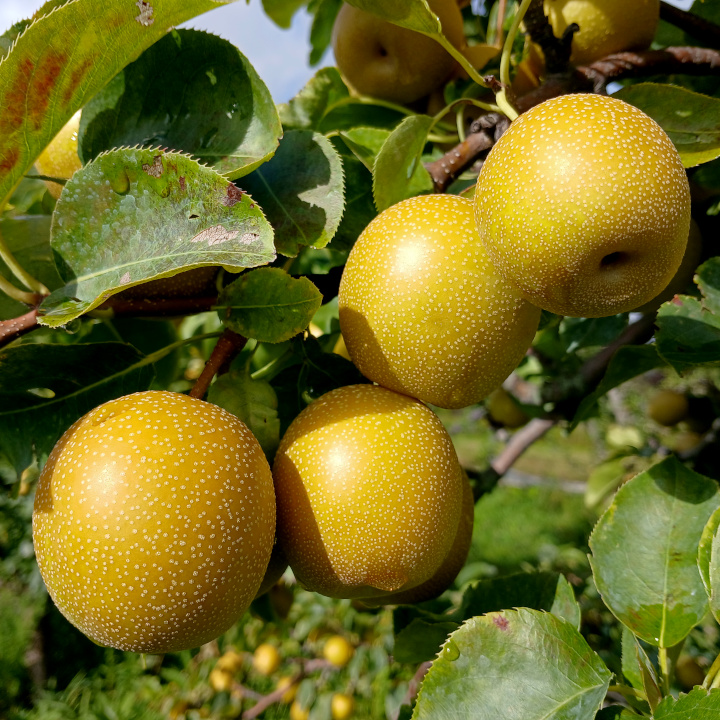
>>> Korean Giant – a classic asian pear variety. very large fruit great for storage ripening in mid-October. zone 5
Generally speaking your safest bet for cross pollination is to have similar types of pears close to each other. Often euro pears and asian pears can cross pollinate well. Send us a message if you’re unsure. Again, grafting another variety onto your tree later is quite manageable.
–
Full size seedling pears are just unwieldy! So we have a mixture of pears on well proven, more manageable rootstocks:
OHxF 97 (just remember 97) – expect a strong tree that will require a ladder at maturity
OHxF 87 (just remember 87) – expect a strong tree where ladder management will be less important, with slightly earlier yields (than on 97) in ideal conditions
–
Growth Parameters:
Besides the notes mentioned above, try to avoid wetter more water stagnant areas.
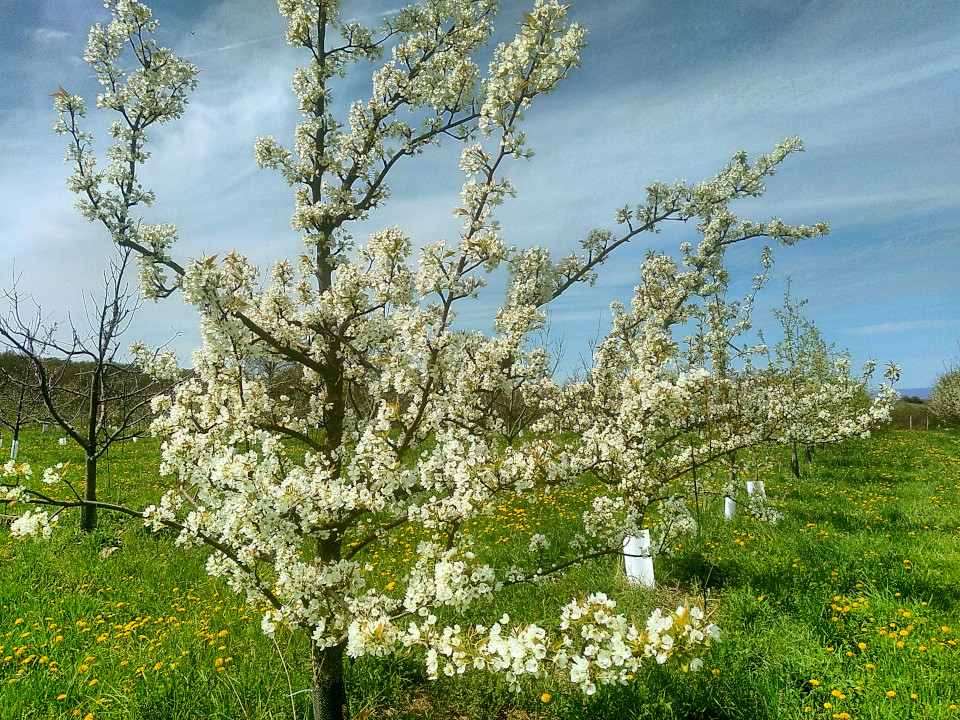
Pears are notably upright growers so considering branch bending or limb spreaders when the tree is young can be worthwhile, however pears will generally fruit well even with upright branches. At minimum, try to prune the trees to promote more wide spreading growth.